
Created in Choosing Your Pet, Dogs
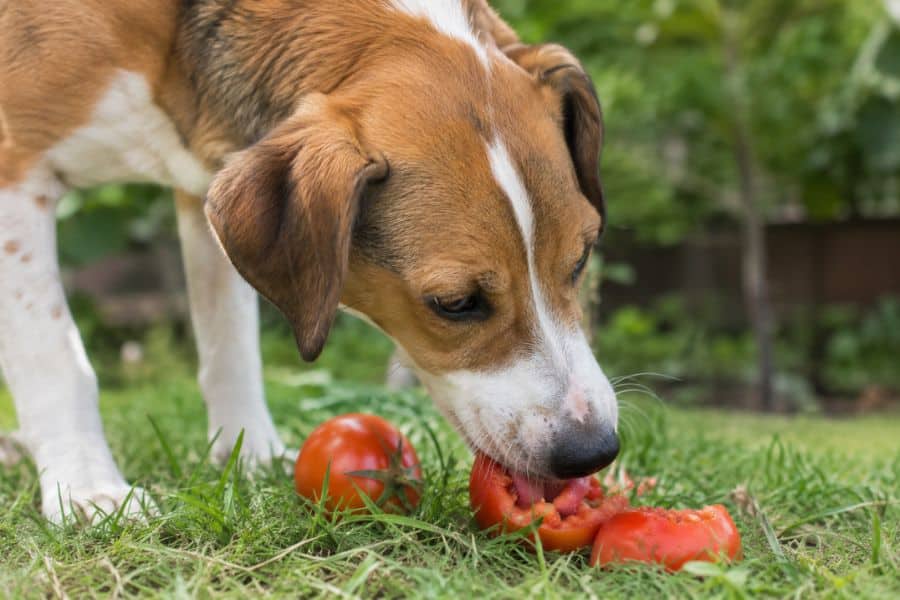
A ripe red tomato is generally safe for dogs in small amounts. The concern rises when a dog eats green tomatoes, stems, leaves, or a large quantity. These plant parts contain higher levels of solanine and tomatine, compounds that may cause digestive or nervous system problems.
This guide covers what to do after tomato exposure, symptoms to watch for, situations that need urgent attention, and ways to prevent repeat incidents. Knowing what your dog ate, how much was consumed, and when it happened gives your vet useful information for deciding what care is appropriate.
Can Dogs Eat Tomatoes?
Healthy dogs can usually eat small portions of ripe, red tomato flesh. Plain tomato should not contain salt, sauces, garlic, onions, spices, or other added ingredients.
Tomato plants need more caution. Green tomatoes, stems, and leaves contain higher concentrations of potentially harmful compounds. Dogs that chew garden plants can consume these parts without an owner noticing.
What Happens If a Dog Eats Tomatoes?
Many dogs that eat a small amount of ripe tomato have no serious reaction. Some may experience mild stomach upset. Larger exposures or ingestion of plant material can produce more concerning signs.
Watch for vomiting, diarrhea, drooling, reduced appetite, weakness, unusual sleepiness, abdominal discomfort, or behavior changes. More serious poisoning can involve tremors, poor coordination, an abnormal heartbeat, breathing difficulty, or seizures.
When Should You Call the Vet?
Call your vet if your dog eats green tomatoes, tomato leaves, stems, or an unknown amount of plant material. Contact is also appropriate after a large quantity of ripe tomatoes or when vomiting, diarrhea, weakness, or unusual behavior develops.
Give the clinic clear details. Include your dog’s approximate weight, tomato type, estimated amount, plant parts eaten, and approximate time of ingestion. Do not wait for symptoms when you know your dog consumed a substantial amount of potentially harmful plant material. Early guidance can determine whether home monitoring is reasonable or an examination is needed.
When Home Monitoring May Be Reasonable
A dog that ate one or two bites of ripe, plain tomato and feels normal can often be watched at home. Keep fresh water available and avoid additional treats. Monitor appetite, energy, stool, and behavior. Contact your vet if anything changes. Do not rely on internet advice alone when the exposure involves plant parts or concerning symptoms.
Signs That Need Emergency Care
Some symptoms require urgent attention. Seek emergency help if your dog has trouble breathing, collapses, experiences seizures, cannot stand normally, shows severe weakness, or appears severely disoriented.
Emergency concerns are not limited to tomato compounds. Tomato-based foods may contain garlic, onions, excessive salt, fatty ingredients, or other substances that create separate risks. Pizza, pasta sauce, salsa, and seasoned tomato dishes need extra caution.
What to Do If Your Dog Eats a Tomato
Remove remaining tomatoes and plant material from your dog’s reach. Keep your dog calm and observe behavior.
Do not induce vomiting unless a qualified professional specifically tells you to do so. Homemade methods can cause injury or aspiration. Do not give human medicines to counteract symptoms without professional guidance.
Contact a clinic for personalized veterinary care when the exposure is uncertain or symptoms appear. A professional can assess the situation using your dog’s size, age, health history, and exposure details.
Tomato Plant Poisoning in Dogs
Tomato plant poisoning is more concerning than eating a small piece of ripe tomato. Leaves, stems, and unripe fruit contain higher concentrations of compounds that can affect dogs.
Symptoms may start with digestive changes and progress to weakness, coordination problems, tremors, or other serious signs after significant exposure. Do not assume a dog is safe because the plant was homegrown or organic.
How Much Tomato Is Safe for Dogs?
There is no single safe amount for every dog. A tiny portion of ripe tomato flesh may be tolerated by many healthy dogs. A large serving can cause stomach upset even without poisoning.
Dogs with dietary restrictions or recurring digestive problems may need different guidance. Ask your vet before introducing new foods when your dog has a sensitive stomach.
How to Prevent Tomato Exposure
Store tomatoes where your dog cannot reach them. Keep kitchen counters clear during food preparation. Secure garden beds with fencing or barriers. Remove fallen tomatoes from outdoor areas.
Check prepared foods before sharing them. Plain ripe tomato differs from sauces and dishes containing ingredients that can be harmful to dogs. A simple food choice can prevent an unnecessary poisoning concern.
Frequently Asked Questions(FAQs)
1. Can dogs eat red tomatoes?
A: Yes. Small amounts of ripe, red tomato flesh are generally tolerated by healthy dogs. Remove stems and leaves, and avoid seasoned tomato products containing salt, garlic, onions, sauces, or other added ingredients.
2. What if my dog eats a green tomato?
A: Green tomatoes contain higher levels of potentially harmful compounds than ripe tomato flesh. Contact your vet for guidance, especially if your dog ate several tomatoes, plant material, or develops vomiting, weakness, tremors, or unusual behavior.
3. Are tomato leaves poisonous to dogs?
A: Tomato leaves and stems can contain higher concentrations of compounds that may cause illness. Contact a professional after significant plant exposure. Seizures, collapse, breathing difficulty, or severe weakness require immediate emergency care.
4. Should I make my dog vomit after eating tomatoes?
A: Do not induce vomiting unless a qualified professional specifically directs you. Incorrect methods can cause injury or aspiration. Call your vet or an emergency clinic with details about the tomato, amount, plant parts, and timing.
5. How long after eating tomatoes will symptoms appear?
A: Symptoms depend on the amount eaten and the plant material involved. Stomach upset may appear before serious signs. Monitor your dog closely and contact a professional when symptoms develop, or the exposure was substantial or uncertain.
6. Can tomato sauce make dogs sick?
A: Yes. Tomato sauce may contain onions, garlic, salt, spices, or rich ingredients that create additional risks. Check the ingredient list and contact your vet if your dog consumed a significant amount or develops concerning symptoms.
Categories